Camel supplier for Egypt before Ramadan: get the shipment on time
Importers who secure camels before Ramadan plan early. Learn what to define before ordering from a camel supplier for Egypt, how hashi, qa'ood and jamal differ, and what drives the cost of importing camels.
One importer secures the camels they need before Ramadan, while another is still looking for a shipment when demand and competition peak. Price alone does not explain the difference. It comes down to choosing the right source, defining needs clearly, and arranging supply at the right time.
MHS Group Export supplies livestock from Somalia to Arab markets and helps importers in Egypt plan orders around the quantities and timing they need. When you look for a camel supplier for Egypt, confirming that a shipment is available is only the first check. You also need to judge whether the supplier can meet the supply and export requirements.
So what should you settle before importing camels to Egypt for Ramadan?
What shapes camel demand in Egypt during Ramadan?
Camel demand in Egypt does not depend on Ramadan alone. It also depends on the local market, the volume of demand in the regions where the camel trade is concentrated, and the importer's ability to secure the right quantities from the source.
Birqash is one of the best-known camel markets in Egypt. It receives animals from several African sources, so traders and importers looking for shipments that fit the market benefit from having more than one supply source.
As Ramadan approaches, the required quantity, the delivery date, and the choice of a suitable camel supplier for Egypt matter more. Settling them early lets the importer build a purchasing plan around their business instead of making last-minute buying decisions.
Camel supplier for Egypt: what to define before ordering a shipment
Before contacting a camel supplier for Egypt, the importer needs to turn their business need into clear specifications. "I need camels for Egypt" is not enough to define the right shipment.
Prepare the following information:
The number of head required.
The age category that suits your business.
The average weight required.
The purpose of the shipment.
The expected arrival date of the animals.
Any special specifications you need.
Expected quantities for future shipments, if your business depends on repeat supply.
The clearer the specifications, the easier it is for the supplier to confirm what it can deliver and discuss options that fit your needs.
Read more: South African Boer goat supplier for trade and export
Hashi, qa'ood, and jamal: why specify age when ordering camels?
The names used for camels in Arab and Gulf markets change with age, so buyer and seller should agree on the specifications they mean rather than rely on the name alone.
Hashi is a young camel from birth to about two years old. The term is widely used in some Gulf markets.
Qa'ood is a young male camel, at the stage that follows hashi.
Jamal refers to an adult male camel. Age and weight matter more when the shipment is for a business with defined specifications.
That is why the importer should state the required age, weight, and category in the supply request, especially when the business has a specific need.
How to choose the right camel source for the Egyptian market
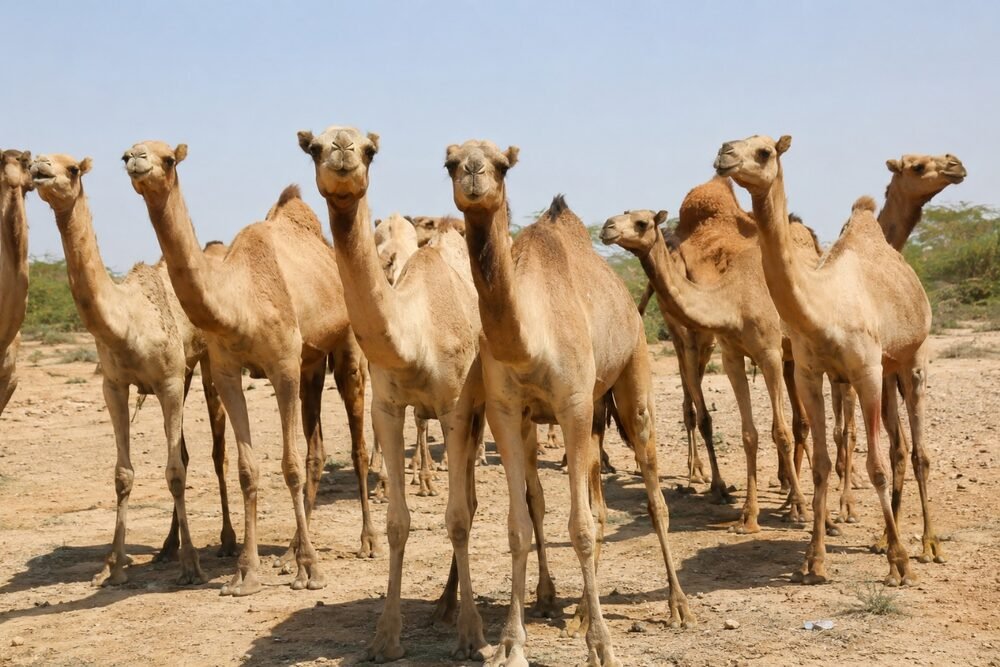
Price should not be the only factor in choosing a country of origin. What matters is whether the source can provide animals to the required specifications and complete the export and import procedures.
Somalia is one of the sources tied to the camel trade with Egypt, and shipments of Somali livestock and camels have reached the Egyptian market in recent years.
Egypt has also received Somali camel shipments as part of supply operations meant to support the market, which shows real trade between the two countries in the livestock sector.
For the importer, the value of a camel supplier for Egypt lies in its ability to prepare the required quantity and specifications and to coordinate the supply process. Having camels available is only part of it.
What affects the cost of importing camels to Egypt?
There is no single price for imported camels, because the value of each deal depends on the details of the shipment.
The main factors are:
Number of head. The deal changes with the size of the order and the quantity required.
Age and weight. The specifications you need affect the value of the shipment, so define them before asking for a price.
Country of origin. Supply costs differ by source and by how the animals are prepared for shipping.
Transport and shipping. Transport arrangements are part of the total cost and vary with the shipping route and method.
Delivery date. Seasons and high demand can affect available quantities and shipping arrangements.
Import requirements. Live animals are subject to veterinary and import procedures that you should account for when planning the deal.
Asking only for the price per head does not give the importer a full picture of the final import cost.
Why do veterinary procedures matter when importing camels to Egypt?
Veterinary procedures are a core part of importing live animals, and a shipment cannot be planned without them.
Animals imported into Egypt go through inspection and veterinary procedures that check the shipment is safe and meets the official requirements in force.
Requirements vary with the country of origin, the type of shipment, and the regulations in force at the time of import, so the importer should confirm the official procedures before shipping.
The importer also needs to coordinate the documents, health certificates, and other procedures for the shipment under the rules that apply at the time of import.
What should a professional camel supplier provide to the importer?
A specialist supplier does more than sell animals. Its value lies in understanding the shipment's specifications and coordinating quantities, timing, and export requirements.
What the importer needs most from the supplier:
Clear information about available quantities.
The specifications it can supply.
Clear expected delivery dates.
The ability to prepare shipments as agreed.
Experience with livestock export procedures.
Willingness to discuss future shipment needs.
These points help the importer make a clearer decision, especially when the goal is an ongoing supply relationship rather than a single deal.
How does MHS Group Export serve camel importers?

MHS Group Export exports livestock from Somalia and South Africa to Arab markets and offers supply options for importers and traders based on the product and the target market.
The company's supply lines include:
Camel exports from Somalia.
Sheep and calf exports from Somalia.
Dorper sheep exports from South Africa.
Boer goat exports from South Africa.
Meat exports from South Africa.
Service for livestock importers in Egypt, Saudi Arabia, Oman, and other Arab markets.
For the Egyptian market, the company focuses on camels and calves, in line with its supply strategy for importers in Egypt.
Importers can contact the company's team to discuss quantities, specifications, delivery dates, and the shipping options that suit the shipment.
Read more: Calf supplier for Egypt: how to prepare for market demand before Ramadan
Contact MHS Group Export
If you are preparing for Ramadan or planning to work with a camel supplier for Egypt, contact the MHS Group Export team to discuss your business needs and the supply options available.
Egypt office: +20 155 741 2975
South Africa office: +27 774 540 935
Somalia office: +252 906 790 210
Contact form: Send your shipment details
Related products:
Frequently asked questions
Can Somali camels be imported to Egypt?
Yes. Live animals are traded between Somalia and Egypt, and the Egyptian market has received shipments of Somali camels and livestock in recent years, according to published data and reports on the livestock trade between the two countries.
When is the best time to order a camel shipment to Egypt before Ramadan?
Define your needs and contact the supplier early enough to review quantities, specifications, and required procedures and to arrange shipping. Waiting until the season is close means ordering when supply is under the most pressure.
How much does it cost to import camels from Somalia to Egypt?
The cost depends on the number of head, age, weight, country of origin, shipping costs, import requirements, and market conditions at the time of contract, so no single price applies to every shipment.
What is the difference between hashi, qa'ood, and jamal?
Hashi is a young camel, qa'ood is a young male camel, and jamal refers to an adult male camel. Some markets and regions use these names differently, so state the age and weight when ordering a shipment.
Does MHS Group Export supply camels for export to Egypt?
Yes. MHS Group Export exports camels from Somalia, and importers can contact the company to learn the available quantities, specifications, and supply options for their needs.
How do I order a camel shipment from Somalia to Egypt?
Start by defining the number of head, the specifications, and the target arrival date. Then contact the supplier to discuss availability, supply and shipping procedures, and the requirements of the Egyptian market.
Conclusion
A successful camel import to Egypt, especially in high-demand seasons, starts before any shipment is found. It starts with defining the need, choosing the right source, and aligning product specifications with procedures and timing.
With active trade in live animals between Somalia and Egypt, Somali camels remain a supply source importers can consider when planning for the Egyptian market.
If you are looking for a camel supplier for Egypt to meet your business needs before Ramadan or year-round, contact MHS Group Export to discuss quantities, specifications, and supply and shipping options for your shipment.
Read more: Certified halal carcass supplier for Arab and global markets